
Why Environmental Noise Monitoring Is Important
According to the World Health Organisation (WHO), after air pollution, noise pollution is the second largest environmental cause of health problems.
Everyone has the right to live a life that is free of excessive noise disturbance. Not only can noise pollution cause annoyance and distress, but it can also lead to more serious health conditions. Research has shown that when exposed to noise levels great than 40 dB while sleeping, people are at greater risk of sleep disturbance, which can have an adverse effect on people’s mental wellbeing. Levels above 55 dB can cause conditions such as high blood pressure and ischaemic heart disease.
For more than 50 years, Cirrus Research has designed and supplied intuitive acoustic measurement solutions to help businesses across the world protect people and the environment from noise. We’re here to make it easy and simple.
EU Environmental Noise Policy
Environmental Noise is one of the fastest growing areas of noise monitoring, mapping and control. The EU has introduced a number of Directives aimed at increasing the level of information about Environmental Noise across the EU.
In 1996, data from the EU Green Paper on Future Noise Policy estimated that around 20% of the EU's population, or close to 80 million people, suffer from noise levels that experts consider to be unacceptable. Most of these people become annoyed and suffer from sleep deprivation, which experts fear will lead to adverse health effects.
An additional 170 million citizens are now living in so-called "grey areas" where the noise levels cause serious annoyance during the daytime.
Causes of Environmental Noise
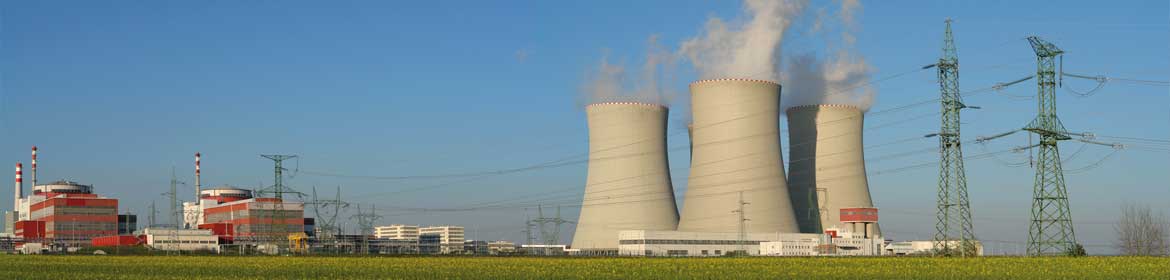
Many of the demands of modern society result in the creation of noise sources, heavy industry, construction, such as larger airports, additional power stations and higher road traffic levels.
In addition to this, the expansion of towns and cities, driven by the demand for housing, has often resulted in the development of land near to existing noise sources. These trends have meant that many more industries are now required to monitor their environmental noise impact.
But noise pollution can be controlled. Cirrus Research provides a range of solutions to make it easy, simple and less time-consuming.
Cloud-connected remote environmental noise monitoring solutions
Cirrus Research has developed an integrated cloud-based solution for unattended, remote monitoring of environmental noise, the Quantum Outdoor. We've also worked with some of best environmental instrument suppliers in world to further enhance Quantum Outdoor with the ability to measure particulates and gases, vibration, and weather and wind speed. So now you can get all the data you need in just one place, anytime, anywhere and on any device.
TELL US WHAT YOU NEED
Our recommended instruments forEnvironmental Noise Monitoring
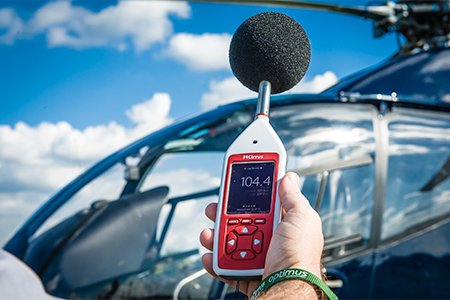
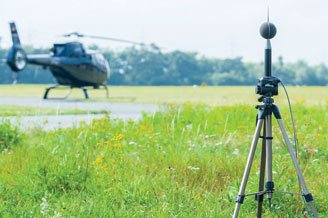
Cloud-connected remote noise monitoring

What governs Environmental Noise Monitoring?
On 21st May, 2002, the Council of Ministers formally approved the EU Environmental Noise Directive. Directive 2002/49/EC of the European Parliament and of the Council of 25th June 2002 relating to the assessment and management of environmental noise is now being implemented in the EU Member States.
The Environmental Noise Directive is a direct result of the European Union's Noise Policy Green Paper from 1996. It covers transportation and industrial noise in the environment. The directive requires that noise maps and action plans (noise policy) be made for:
- Agglomerations with populations greater than 100 000
- Major roads with more than 3 000 000 vehicles a year (approximately 8 000 a day)
- Major railways with more than 30 000 trains a year Major civil airports with more than 50 000 operations year (approximately 135 day)
More Information
Find out more
If you have any questions or if you would like any more information, please contact us and we will be pleased to help.
From the UK, contact us on 01723 891655.
From outside the UK, please contact us on +44 1723 891655.
You can also contact us via our contact form.