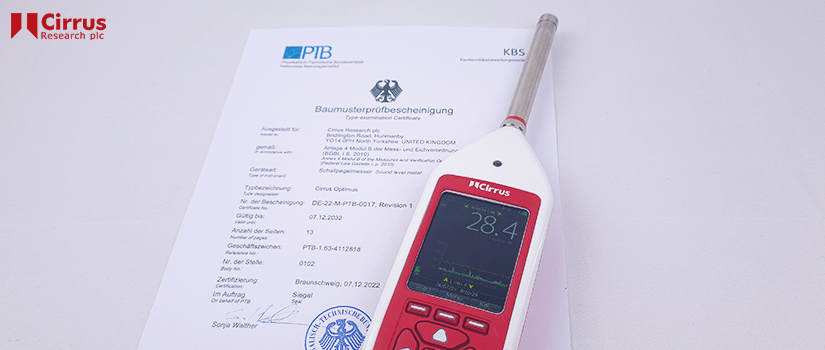
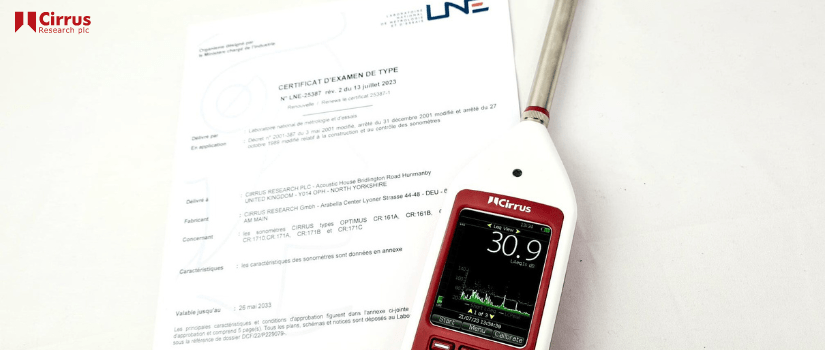
250xappluesWe’re delighted to announce that the optimus red and optimus green sound level meters have been granted Type Approval to UNE-EN 61672 Parts 1 & 2 in Spain by Applus+, one of the world’s leading testing, inspection and certification companies.

CERTIFICADO DE EXAMEN DE MODELO CR:161 Optimus Sonómetro UNE-EN 61672After a series of long and detailed tests, which include both electrical and acoustic verification, approval numbers have been issued for the Class 1 optimus green and optimus red instruments as follows:

CR:161A, CR:161B & CR:161C
CR:1710, CR:171A & CR:171B

The approval numbers are:

No. 02-001-B-62/13-R  the CR:161 (optimus red) sound level meters

No. 02-001-B-63/13-R CR:171 (optimus green) sound level meters

The standards that were used in the verification were:

CERTIFICADO DE EXAMEN DE MODELO CR:171 Optimus Sonómetro UNE-EN 61672UNE-EN 61672-1: electroacústica : sonómetros. Parte 1, Especificaciones
UNE-EN 61672-2: electroacústica : sonómetros. Parte 2, Ensayos de evaluación de modelo

What is Type Approval?

Type Approval, or Pattern Approval, is a method where a test laboratory such as the Applus, PTB or LNE tests an instrument against a set of standard tests to ensure that it meets the performance claims of the manufacturer.

The optimus sound level meters have been designed to meet the requirements of IEC 61672 (and the corresponding UNE-EN, EN and DIN standards) and so these independent test have been carried out to verify that that the instruments do indeed meet these requirements. The IEC 61672 standard is in three parts.

The first of these is known as Electroacoustics – Sound level meters – Part 1: Specifications  and this defines the performance specifications for the instruments.

Part 2 is known as Electroacoustics – Sound level meters – Part 2: Pattern evaluation tests and this defines the tests and checks that a laboratory must carry out when they are testing an instrument for Type or Pattern approval. These are the tests that the PTB have been carrying out on the optimus sound level meters.

Part 3 is known as Electroacoustics – Sound level meters – Part 3: Periodic tests  and this defines the tests that should be carried out during a Periodic or routine verification.

This post has more information about the different sections of the IEC 61672 standard.

Related Posts:

What is Type or Pattern Approval?

Updated Type Approval for the Cirrus Optimus Green Sound Level Meters

AuditStore Data Verification

PTB Type Approval for the Optimus Sound Level Meters

Tonal Noise Detection with the optimus green sound level meters

Type Approval, or Pattern Approval, is a method where a recognised test laboratory, such as the PTB in Germany or LNE in France in the case of sound level meters, tests an instrument against a set of recognised and published standards to ensure that it meets the performance claims of the manufacturer.

The laboratory will test a number of samples of the product to check that they all meet the required standard. Once this has been completed and all of the samples have passed the tests, that particular model, or type, is approved and certified as meeting the claimed standards. Continue reading »

600xnoise-doctor

What is the Noise Doctor?

The Noise Doctor is a range of advice, products and support services put together by Cirrus Research, the experts in noise measurement instruments.

At Cirrus, we’re often asked questions such as:

“What is the best sound level meter for me to meet the Noise at Work Regulations?”,

“Why do I need to get my sound level meter calibrated?”

“Can I get training on using my sound level meter?”

The Noise Doctor is here to answer your questions and to help you find whatever you need.

Find out more about the Noise Doctor and ask your question on our website at www.the-noise-doctor.co.uk or on our main website at www.cirrusresearch.co.uk/the-noise-doctor/

Follow the Noise Doctor on Twitter @TheNoiseDoc and see the Noise Doctor in action at the 2013 Safety & Health Expo, Stand F20.

Our new support website is now available at http://support.cirrusresearch.co.uk

Visitors to the site can search through answers to questions that have been asked by existing users, as well as look through current technical documentation uploaded by Cirrus. If you can’t find the answer to your question, then you can simply ask your question on the website and it will be picked up by someone on the support team at Cirrus Research.

The support website will assist visitors with finding solutions to everything from user manuals for the Optimus sound level meters to where to download the latest version of the NoiseTools software, as well as being able to download the latest versions of the Cirrus software.

Commenting on the launch of the new support website, James Tingay, Group Marketing Manager said: “We want to ensure that all of our customers are getting the most from their Cirrus Research noise measuring equipment, so we have introduced the support website where visitors will be able to find a cure to their noise measurement issues with the help of the Noise Doctor.”

James continued: “We often get customers asking questions around which sound level meters will meet regulations and why sound level meters need to be calibrated. We encourage our customers and visitors to our website to interact and start a conversation with us on-line, so that we can respond to their queries.”

The Noise Doctor branding brings together the advice, products and support services Cirrus Research has to offer. More details of the Noise Doctor can be found on the website at www.the-noise-doctor.co.uk.

During the upcoming Safety & Health Expo, the Noise Doctor will be tweeting questions and answers to @TheNoiseDoc

To look at the new support website or to find an answer to any noise measurement issues you may have, please visit: http://support.cirrusresearch.co.uk/

This post is an answer to a question that was posted on our blog recently.

The questions was “Is it possible to calculate the overall dB(A) value from a set of 1:1 octave band values?”.

The answer to this is yes, but there are a couple of requirements in terms of how the data has been measured.

The first is that the octave band data values should have been measured at the same time using a real-time octave band sound level meter such as the CR:162C optimus red or CR:171A optimus green instruments.

The second is that the octave bands have been measured as Leq (rather than sound level). This is important as it allows us to gather all of the noise energy together to calculate an overall dB(A) value. Continue reading »

676xnoisetoolsA new version of the NoiseTools software is now available for download.

This new version brings a number of new features and updates along with additional language options.

NoiseTools is compatible with the following:

  • Optimus Sound Level Meters
  • doseBadge Noise Dosimeter
  • Trojan Noise Nuisance Recorder
  • CR:260A Sound Level Meters
  • CR:800C Sound Level Meters

NoiseTools is also fully compatible with Windows 7 and Windows 8 and can be updated free of charge from the Cirrus website or through the auto-update features within NoiseTools itself.

The new version of NoiseTools is v1.4.5.

Throughout 2012 we’ve posted  information and answers to various questions from our customers, distributors and sales team on our NoiseNews blog.

The Top 10 blog posts have now been collated from the most popular read by our customers and website visitors and we’ve made this into a book for  you to download.

Over the past year, the blog has seen an impressive number of visitors, with a staggering 18,875 people reading the numerous postings!

These blog posts explains the different types of equipment from Cirrus Research, including information on frequency weightings, class and maintenance etc.

Other examples from the Top 10 list includes an introduction to noise induced hearing loss and ways to avoid this.

The top blog post posed the question “What are Octave and Third Octave on a sound level meter?” with an impressive 3,161 readers eagerly looking for the answer.

James Tingay, Group Marketing Manager at Cirrus Research comments: “The NoiseNews blogs are a great platform for our customers to communicate with professionals about noise measurement equipment.” He continued to say, “We are also delighted to see such a large number of people visiting and reading the Cirrus Research blogs.”

To view the Top 10 blog posts in full go to: http://cdn.crplc.com/documents/Top-10-Blog-Posts-Issue-2.pdf

start

A new version of the NoiseTools software is available that is compatible with the new Windows 8 operating system which is released toady, 26th October 2012.

Version 1.4.4 of NoiseTools can be downloaded from the Cirrus website or updated from within NoiseTools itself.

Click the Help, Check for updates menu and follow the on screen instructions.

Continue reading »

A new version of the NoiseTools software is now available.

For existing users, we would recommend upgrading using the update function built into NoiseTools. Click  Help and then Check for Updates. Follow the on screen updates for details.

You can also download the updates for NoiseTools directly from the Cirrus Research website. Click here to download the latest update.

What’s new in NoiseTools

This update of NoiseTools contains a number of new features including:

  • Enhancements to the periodic noise calculator
  • Markers can be removed from the periodic noise calculator
  • Single Period for periodic calculator
  • Simplified Chinese translation added
  • Improved download speed and stability
  • Additional settings for CK:680 Outdoor noise measurement kit
  • Added support CR:19xBE optimus
  • Several user interface improvements.
  • Various minor bug fixes.

We’ve uploaded a new set of support videos for NoiseTools to our video website at www.cirrusresearch.tv

These can also be found on our Wiki & Knowledgebase site at wiki.cirrusresearch.co.uk

© 2013 NoiseNews